Quick Answer: A custom walk-in cooler is built right when it’s correctly sized for your real product load, constructed with quality insulated metal panels (IMP), fitted with a properly matched and installed refrigeration system, and equipped with heavy-duty doors and seals built for daily use. When one team handles the build, refrigeration, and doors together, there’s a single point of accountability and the room performs efficiently for 15+ years.
A walk-in cooler looks simple from the outside; an insulated box that stays cold. But the difference between a cold room that runs efficiently for two decades and one that fights you the whole time comes down to details most buyers never see. Whether you’re outfitting a new restaurant in San Antonio, expanding a Hill Country meat market, or replacing a walk-in that never held temperature, this guide explains what a proper custom walk-in cooler or freezer build actually involves and why “turnkey” matters more than most people realize.
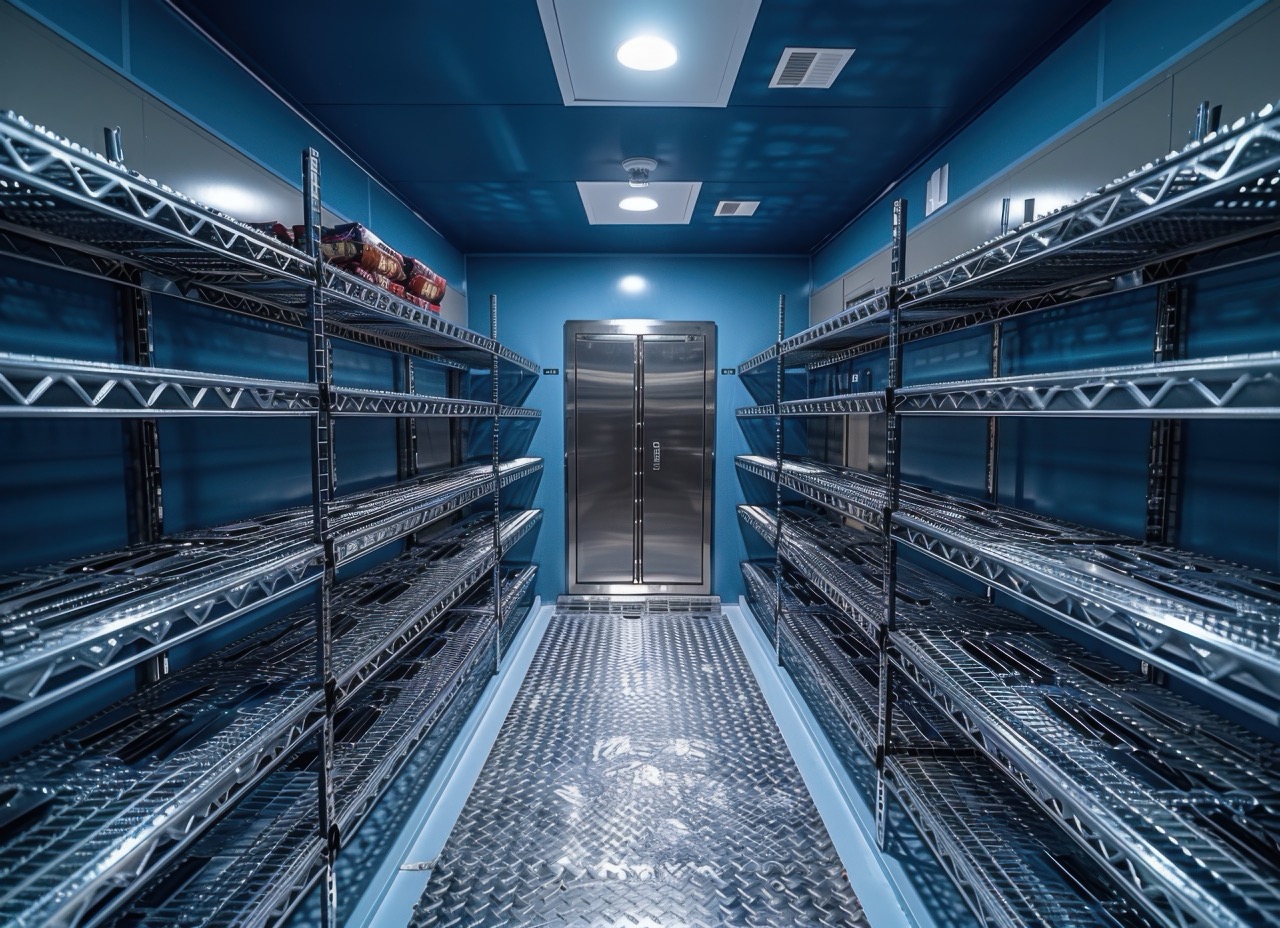
What is a custom walk-in cooler?
A custom walk-in cooler is a refrigerated room built to the specific size, shape, and cooling requirements of your space and your product — rather than a fixed, off-the-shelf unit. Custom builds matter because real commercial spaces rarely fit a standard box: you may need to work around support columns, low ceilings, odd corners, or a specific door position for forklift access. A custom cold room uses your available space efficiently and is sized for the actual heat load it has to handle.
Sizing it for the real load
The most important decision happens before a single panel goes up: sizing. A cooler that’s too small can’t keep up when it’s packed and busy. One that’s oversized wastes energy and money every day it runs. Proper sizing accounts for:
- Product volume and turnover — how much you store and how fast it moves
- Door-opening frequency — every opening lets warm air in; a busy kitchen door behaves very differently from a back-stock room
- Ambient heat — this is where South Texas matters: a walk-in in a hot San Antonio kitchen or an un-air-conditioned Hill Country back room carries a higher heat load than the same box in a cool climate
- What you’re storing — fresh produce, frozen goods, and meat have different temperature and humidity needs
This is engineering, not guesswork. Getting it right is what delivers stable temperatures and reasonable energy bills from day one.
Why insulated metal panels (IMP) are the foundation
The walls are everything. Insulated metal panels (IMP) are the modern standard for commercial cold rooms: two metal skins bonded to a rigid foam insulation core, engineered to lock together tightly. Quality IMP construction matters for three reasons:
- Temperature efficiency — tight-sealing, high-R-value panels mean your refrigeration system works less to hold the same temperature, lowering operating costs.
- Moisture resistance — properly sealed panels keep humidity and condensation out of the insulation, which prevents hidden corrosion and mold.
- Cleanability and compliance — smooth metal panel surfaces are far easier to clean and hold up to food-safety inspection, which matters for any operation handling food.
Cutting corners on panels is the most expensive mistake a buyer can make, because you pay for it in energy costs and moisture problems for the life of the room.
The right refrigeration system, installed correctly
The best-built box in the world underperforms if the refrigeration is undersized, poorly placed, or carelessly installed. Doing it right means:
- Correct system selection and sizing matched to the room and its heat load
- Proper refrigerant line runs and component placement
- A dialed-in startup that verifies the system holds temperature under real conditions
At 3238 Refrigeration, we sell, install, and service equipment from all major brands, including Copeland — and because we build the room and install the refrigeration as one project, the system is matched to the box from the start rather than bolted onto someone else’s work.
Doors and seals built for daily abuse
Doors are the hardest-working part of any cold room. In a busy operation they open and close hundreds of times a day and take hits from carts and, in warehouses, forklifts. The details that matter:
- Heavy-duty doors rated for commercial traffic
- Quality hinges and closers that keep the door shut on its own
- Tight, durable seals that keep cold in and Texas heat out
Planning for the forklift reality
In refrigerated warehouses and production facilities, forklifts will eventually clip a panel or a door frame — it’s a matter of when, not if. A cold room built by people who also repair that damage is designed to take it, and it’s far easier to service later when the same team built it. (We cover repair-versus-replace decisions in our forklift damage guide.)
Why “turnkey” is the real advantage
Here’s what separates a smooth cold-room project from a frustrating one: accountability. When separate contractors handle the panels, the refrigeration, and the doors, any problem becomes a finger-pointing exercise — the panel installer blames the refrigeration tech, who blames the door supplier. When one team designs the room, builds the panels, installs the refrigeration, and handles the doors, there’s one number to call and one company that knows your system inside and out.
That’s the model 3238 Refrigeration is built on. Custom walk-in coolers and freezers are our specialty: we construct cold rooms in any size or shape using insulated metal panels, install and configure the refrigeration, and handle the doors and panels — including the forklift repairs other companies avoid.
Key Takeaways
- A custom walk-in cooler is built to your space, shape, and real heat load — not a fixed off-the-shelf size.
- Correct sizing accounts for product volume, door use, ambient heat (a real factor in Texas), and what you store.
- Quality insulated metal panels (IMP) drive efficiency, moisture resistance, and cleanability.
- The refrigeration system must be matched, installed, and started up correctly — not bolted on afterward.
- A turnkey builder gives you one point of accountability from the first panel to the final temperature check.
Frequently Asked Questions
How long does it take to build a custom walk-in cooler? Timelines vary with size, configuration, and site conditions, but many commercial walk-in coolers can be built and installed within a few weeks of finalizing the design. The design and sizing phase is what protects you from problems, so it’s worth not rushing.
What’s the difference between a walk-in cooler and a walk-in freezer? A walk-in cooler holds refrigerated temperatures at or below 40°F (4°C) for fresh food, while a walk-in freezer holds at or below 0°F (-18°C) for frozen storage. Freezers require more insulation, different door hardware, and defrost systems to manage frost.
Can a custom walk-in cooler fit an odd-shaped space? Yes. That’s the main advantage of a custom build over an off-the-shelf unit — cold rooms made from insulated metal panels can be configured around columns, low ceilings, corners, and specific door placements to use your available space efficiently.
Do you install the refrigeration too, or just build the room? A turnkey builder does both. At 3238 Refrigeration we construct the cold room, install and configure the refrigeration system, and handle the doors and panels as one project — so everything is matched and there’s a single point of accountability.
Planning a custom cold room?
Whether it’s a new build or replacing a walk-in that never worked right, we’ll design and build it to fit your space and your product. Request a free quote or call [PHONE] — serving San Antonio, Boerne, New Braunfels, San Marcos, and the Hill Country.